The Top 10 American Rock ’n Roll Albums
Best Records Released by American Classic Rock Bands & Artists
CURATED BY INTERNATIONALLY RECOGNIZED ROCK JOURNALIST JIM ESPOSITO
The Top 10 American Classic Rock Albums
The Definitive List
by Jim Esposito
“I’m So Glad I’m Living In The U.S.A.”
Truer words have not been spoken. Even so we were talking about our favorite bands, our favorite albums, started to notice most of them were English. Ironically, of course, the “English” sound was recycled American Blues which kids in the States ignored until they heard it played by skinny, pasty-faced Brits on electric guitars.
We were truly blessed to have grown up through the era of the record album. Was there anything better than ripping the cellophane off a new album? Plopping it on your turntable, pouring over the liner notes. Do you remember where you were the first time you opened Live at Leeds? I had I-Feel-Like-I’m-Fixin’-To-Die with The Fish Game.
Led Zeppelin, The Who, The Rolling Stones were great, but over on this side of The Pond we still managed to hammer out a tune or two every now and then.
One thing forgotten about vinyl albums – they had TWO sides. You went to put a record on, you had to decide – which side? Who listened to the second side of the first Doors album? I never listened to Side Two of Crosby, Stills & Nash, Side One of Silk Degrees, Side Two of Dreamboat Annie.
The “Second Album” Phenomenon
Writing this, I couldn’t help noticing a number of these are second studio albums, which harkens back to a theory I have espoused over the decades. For there’s something about a band’s second album. Typically bands were playing bars, struggling. Hungry, they’re writing tunes because – Hey! This sounds cool! They’re writing songs to write songs, be creative, be ARTISTS. They’re not trying to write commercial hits, fulfill contractual obligations.
They get a record deal, they’ve got 20 to 30 songs they’ve written. They go into a studio, cut 10 of them. Meantime, recording’s a learning process; they’re usually a bit intimidated. But they’ve got their pick of their best songs and a certain spontaneity.
When it comes time to cut their second album bands still got some good tunes left and they’ve been in the studio before, gotten comfortable with the recording process, maybe even learned a trick or two.
As you look at a lot of Classic Rock groups and artists, you’ll see this trend. Their first album features strong songs and a certain spontaneity. Their second shows a familiarity with the studio, still some rather nice tunes, in addition to retaining a measure of spontaneity and enthusiasm. By a band’s fourth or fifth record, however, even though they may be getting slicker, their material’s not as strong – they’re cutting songs they wrote in the last year, in a hotel room, in the back seat of a station wagon.
As a result, a good number of the records I rank here seem to end up being a band’s second studio album.
10. Back in the USA
MC5
The best garage band in the world, Back in The USA was their second LP, but their first studio album, released in 1970. Kick Out The Jams, which came out in ’69, put the “Motor City 5” on the map, was recorded live. Wayne Kramer and Fred “Sonic” Smith might’ve been the first really hot two guitar team in Rock History, and they garnered considerable attention due to their radical political stance at a time when tensions ran high. Though most remember them for lead singer Rob Tyner’s “Kick out the jams, Motherfuckers!” the MC5 were a key component defining the “Detroit Sound,” and are widely regarded as the precursor to Punk.
Produced by Jon Landau years before he hooked up with Bruce Springsteen, Back in The USA is actually a pretty slick record which harnessed and polished these Detroit rockers’ raw power and emotion.
Though listenable, a couple of the tracks are basic parodies of Bubble Gum – a cover of Little Richard’s “Tutti-Frutti,” “High School,” and “Teenage Lust” are kinda hard to reconcile with the MC5’s radical image. But the real core of this record are balls-out rockers like “The American Ruse,” “Shakin’ Street” and their incredibly hot and probably definitive rendition of Chuck Berry’s classic, the title track. “Let Me Try” is an excellent power ballad, which might’ve inspired a legion of hair-bands to come, and try to define what’s going on in “The Human Being Lawnmower.” Obviously it’s an anti-Vietnam song, but where’s the frickin’ structure? This was one of the weirdest, most innovative tracks recorded at the time.
9. L.A. Woman
The Doors
Kinda torn here. I can’t especially argue with anybody who feels The Doors should be higher on this list, and maybe we should be talking about their first self-titled LP. But Side One of The Doors is great, Side Two is a little so-so. Back when we listened to albums, then cassettes, you hardly ever listened to the second side. L.A. Woman, released in 1971, was their sixth and final studio LP. Jim Morrison died shortly thereafter. Though they were great at their best, most Doors albums were spotty. You absolutely LOVED a couple tracks. A couple other cuts were good. Several others you sat through to hear the songs you loved.
Strange Days had “Love Me Two Times,” “Moonlight Drive” and “When The Music’s Over.” The Soft Parade featured “Wishful Sinful,” “Touch Me,” “Tell All The People” and some parts of the title track. Morrison Hotel had “Roadhouse Blues.”
L.A. Woman, however, was an album you pretty much enjoyed all the way through. For some reason the record just jelled. Jim Morrison was a poet at heart, and the material for L.A. Woman simply seemed stronger, more cohesive. Not a bad note on Side One, and though Side Two starts off with one so-so tune, it finishes strong. Along the way highlights include “Love Her Madly,” “Cars Hiss by My Window,” a monster of a title track, “Texas Radio” and “Riders on the Storm,“ an ethereal masterpiece.
”Out here on the perimeter there are no stars.”
8. Katy Lied
Steely Dan
Another tough call since my favorite Steely Dan LP is Countdown to Ecstasy. (Their second, of course.) But I give the nod to Katy Lied simply because it’s a better album. Released in 1975, more than music it is three-dimensional poetry. For their first five LPs Steely Dan was a great rock band – great rock artists, perhaps – kinda jazzy before they morphed into easy listening elevator muzak. Katy Lied, their fourth release, was the turning point where Donald Fagen and Walter Becker dropped any pretext Steely Dan was “a band.” They told the other guys and their record company they would not tour any more. They just wanted to hole up in the studio, dedicate themselves to being recording artists.
A truly cohesive album, every track’s like letter perfect. Larry Carlton’s guitar sears through “Daddy Don’t Live in That New York City No More.” “Rose Darling” is actually kinda sweet and romantic for these guys. The highlight of the record might be Rick Derringer’s extended solo in “Chain Lightning,” and “Any World (That I’m Welcome To)” is a truly beautiful tune that takes me back to a special time in my life, blowing pot smoke out the window of my $100 a month studio apartment on the Venice Boardwalk, watching kids play football over my artboard against the window of the local weekly tabloid I was pasting up in an office building overlooking their schoolyard on the Marina Peninsula.
7. Idlewild South
Allman Brothers
The real jewel of the Allman Brothers’ catalog, the worst thing about 1970’s Idlewild South is that it’s way too short. Only 17 minutes each side. Old LPs maxed out between 20 and 22, but it just never seemed so short before. The needle lifted, you thought: “That’s IT?” I want my five more minutes. Their second studio album, some might argue the Allmans were more of a Blues Band, especially in the Duane days, but there’s not a bad note on this record. Their first produced by the legendary Tom Dowd, so the sound is exceptional.
Idlewild South is simply a superb collection of songs. “Midnight Rider” and “In Memory of Elizabeth Reed,” the free-flowing instrumental a budding Dicky Betts composed to honor their coke dealer, are Allman Brothers staples. Betts also wrote “Revival.” Gregg contributed bluesy Southern Rock tunes like “Don’t Keep Me Wondering,” “Please Call Home” and “Leave My Blues at Home.” And you gotta dig their rendition of Willie Dixon’s “Hoochie Coochie Man.”
That’s it. Every song on the record. Like I said – way too short. Every one of them excellent. Or better, even classic. Yet, this album gets swallowed up in the legend of the Allmans, simply does not get the props it deserves.
I was in Florida in the early 70s. The Allman Brothers Band had an almost Deadhead type cult who were hip to them, their live performances. The Deluxe Edition of Idlewild South includes cuts from their set at Ludlow Garage in April, 1970. You should seriously check this performance out on YouTube.
6. Love It To Death
Alice Cooper
Love It To Death MADE Alice Cooper, and they never came close to it again. Released in 1971, this was technically the band’s third album. At this point “Alice Cooper” was the band’s name. Their singer was named Vince. Rhythm Guitarist Michael Bruce was the predominant songwriter. Once the group became famous, singer Vince turned into a megalomaniac, glommed the whole act. Their follow-up Killer had a couple good tunes, but Alice Cooper became a carnival act with manager Shep Gordon chief barker. As time went on the music sucked, and sucked, and sucked even more.
Love It To Death, however, is a GREAT rock album. Singer Vince only writes one song on the whole LP, though he’s given partial credit on several others. “I’m Eighteen” gets a lot of airplay, but “Is It My Body” is probably the best tune on the record. The second side’s a kinda Abbey Road trip with several tracks interconnected into a suite around “The Ballad of Dwight Fry.”
Ultimately, aside from a couple tracks on Killer, Love It To Death is the only thing this band ever did that’s still worth a listen.
5. The Captain and Me
Doobie Brothers
If you don’t think The Captain and Me belongs this high on this list you better dig it out, give it another listen. An amazing record, a cohesive album, the production, the musical performances on this LP are top notch. Technically their third, but nobody’s ever heard their first. The generally excellent Toulouse Street was actually their second album and it’s got great stuff. Trouble is “Listen to the Music” is way (way, way, WAY) over-played, and compared to most the Doobies’ stuff it’s practically Elevator Music.
The Captain and Me, from 1973, is a collection of album cuts. “Long Train Runnin’” and “China Grove” got some airplay, but the core of this record are longer, flowing moody compositions like “Dark-Eyed Cajun Woman,” “Clear As The Driven Snow,” “Ukiah” and “South City Midnight Lady.”
Another overlooked release by the Doobies is their fifth album, Stampede. A high-octane guitar rocker with Skunk Baxter featured on lead, cuts like “Neal’s Fandango,” “Texas Lullaby” and “Music Man” seriously cook.
4. Second Helping
Lynyrd Skynyrd
Fair’s fair. Make a list of the best American Rock albums, how do you leave off Skynyrd’s Second Helping? Southern Rock seems a bit under-represented on our list. I can’t blame those who might think Pronounced might belong here instead. “Sweet Home Alabama” gets all the attention, but it’s not even one of the best tracks on the album. That honor belongs to their definitive rendition of J.J. Cale’s “They Call Me The Breeze.” Ronnie told me he heard that song, just had to sing it. Other monster tracks are “The Needle and The Spoon” and “I Need You.” For all their rough and tough, however, you gotta love “The Ballad of Curtis Loew.”
3. You’re Gonna Get It
Tom Petty & The Heartbreakers
You could make a case for Tom Petty’s self-titled first LP and/or Damn The Torpedoes, but for us 1978’s You’re Gonna Get It is T.P. and The Heartbreakers rocking out. “I Need To Know” might be the purest rocker they ever recorded, and “Listen to Her Heart” probably takes you (as well as the rest of us) back to a certain place and time. “Hurt” and “Magnolia” are also great rock tunes.
Ultimately there’s not a bad note on this record. We love their first album, but you can tell they’ve really got their studio chops for You’re Gonna Get It. There aren’t any lofty ideals or grand concepts at work here. These guys are just rocking out.
2. Crosby, Stills & Nash
Crosby, Stills & Nash
Again – fair’s fair. Maybe you can argue it’s not exactly Rock ’n Roll, but any list of the best American albums has to have Crosby, Stills & Nash up near the top. As it is, ranking it Number Two might be a bit low. Their vocal harmonies are sublime, and tunes like “Helplessly Hoping” and “Guinnevere” might be acoustic, but “Long Time Gone” and their version of “Wooden Ships” are masterworks. Stephen Stills simply does not get his props, for he played most the instruments on this record.
1. Night Moves
Bob Seger
Quite simply absolutely the best American Rock ’n Roll album ever recorded. “Started humming a song from 1962.” And that was in ’75. Fifty years later some of us – the real hardcore Classic Rock fans – we’re still humming songs from 1962. And 1967. (’69, ’70, ’71, etc…)
Bob Seger was a great guy, down to Earth. Hard working, he played every dive in the frickin’ country. Put out some excellent records in his early days, including a couple standouts: Back in ’72 and Seven. Much as we liked the guy we were still amazed at Night Moves, the song and the album.
This record starts out strong and doesn’t let you up until halfway through Side Two. “Rock and Roll Never Forgets” hits you like a gut-punch. “All of Chuck’s children are out there playing his licks.” “Night Moves,” then “The Fire Down Below,” “Sunburst,” “Sunspot Baby” and the haunting “Main Street.” These are all incredible, totally classic pure rock tunes, screaming guitars, Seger’s growling vocals, that hard-edge Detroit sound.
Missed It By “THAT” Much!
11. Abraxas
Santana
Santana’s second LP, released in 1970, Abraxas is a slick, polished masterpiece. “Samba Pa Ti” might be one of the best instrumentals in Rock History, and their cover of “Black Magic Woman” sustained Peter Green through his worst. Santana burst onto the scene with “Evil Ways” off their self-titled debut, an eye-popping performance in Woodstock, but Abraxas certainly sets the tone for much of the band’s future efforts – the long, flowing Latin-inspired compositions carried by the incredible guitar work of Carlos Santana.
12. They Only Come Out at Night
Edgar Winter Group
A totally slick, professional record – well written, great production, these guys could frickin’ play. Produced by Rick Derringer, they played the hell out of “Frankenstein” but as is usually the case it isn’t one of the better tracks on this record. This actually turned out to be a bit of a supergroup, with Ronnie Montrose on lead guitar and Dan Hartman on bass, both of whom went on to bigger and better.
If there’s a better guitar rock tune than “Free Ride,” I haven’t heard it. But this album features a number of great songs, opening with “Hangin’ Around” and “When It Comes.” “Undercover Man” is no slouch, either.
13. Bombs Away Dream Babies
John Stewart
A kinda cult album around L.A., released in 1979, Stewart was an alumni of The Kingston Trio (Mark II), known mainly as a songwriter, having penned “Daydream Believer” for The Monkees and “Runaway Train” for Roseanne Cash. The worst song on the record is still pretty good, and the best are great. Co-produced by Stewart and Lindsey Buckingham, who also plays some guitar, while Stevie Nicks does background vocals. “I jump into my car, and I throw in my guitar, people out there turning music into gold.”
14. Cat Mother
Cat Mother
Kinda off da wall, I realize, and tough to include, since maybe 10 or 12 people ever heard this record, but on sheer quality this album deserves consideration. Not even a flash in the pan (what did Jimi’s old girlfriend call them – “ain’t never beens”) this band scored a Top 40 hit with a medley of 50s hits called “Good Old Rock ’n’ Roll” in the summer of ’69 under the nomenclature Cat Mother & The All Night Newsboys. Somewhat unbelievable, their first album was produced by none other than Jimi Hendrix. Neither of their first two LPs garnered much attention. They changed some personnel, their management. For their self-titled third, released in 1972, they brought in guitarist Charlie Prichard and captured lightning in a bottle. Every song on this record is excellent. You can tell the band had a good time recording it, because it’s a lotta fun to listen to.
15. Still Alive and Well
Johnny Winter
Mainly a Blues guitarist, Johnny Winter could really rock when he set his mind to it. A case in point, his 1973 album Still Alive and Well. After checking himself into a booby hatch in New Orleans right next door to Tulane, where friends of mine could hear him playing, Johnny took a while to get back into the music biz. For a while he toured with his brother Edgar and White Trash, which included Rick Derringer. Still Alive and Well hit the stores in ’73, and this record was scorching hot. Produced by the afore-mentioned Derringer, not a dog track on the album. “Rock Me Baby,” “Can’t You Feel It,” “All Tore Down,” the guitar boogie jam of “Rock & Roll,” and two Stones’ songs – “Silver Train” and a great cover of “Let It Bleed.” I’ve got one friend says it’s one of his Desert Island albums.
Chill Out, Dude!
Yes, we got no Pet Sounds. Get over it. There is a mythology about Pet Sounds which is lost on me. I love the Beach Boys, love the whole piano in the beach sand in the living room thing. Fricking CLASSIC. Pet Sounds is a good album, and a groundbreaking achievement in composition, audio and production technique. But I’m sorry, the songs are just not that good. The only tunes from Pet Sounds that makes my Beach Boys playlist are “Sloop John B” (an old folk song) and the incredibly haunting and beautiful “Caroline No.” “Wouldn’t It Be Nice” and “God Only Knows” are sweet, but they don’t hold a candle to “Fun, Fun, Fun,” “Help Me Rhonda” and “Good Vibrations.”
Some people may argue Green River by Creedence Clearwater Revival belongs in the Top 10 Best American Rock albums. We cannot fault those who believe this. Creedence was a great band, distinctly American, and Green River’s probably their strongest LP. “Bad Moon Rising” and “Lodi” are great tunes.
Bob Dylan’s Blood on The Tracks could be considered a top American album, but great though it may be, you can’t call it rock.
If we were looking to expand genres, we’d also have to include Kind of Blue by Miles Davis. Troubadour and/or Naturally by J.J. Cale, and Jimmy Buffett’s Changes in Latitudes.
In addition, I love Hendrix, Springsteen, The Eagles, and ZZ Top as much as the next guy, but find it difficult to include any of their individual albums in my list. My favorite Hendrix is Band of Gypsies, which is live. Darkness and/or The River are the Springsteen records I admire most, but there’s a couple tracks on each I don’t especially care for. I prefer The Long Run to Hotel California, but my list here is based on creative quality not commercial success. The Eagles’ second is Desperado, which I might argue is probably their best overall album, but a little too Country. Still, anybody maintains The Long Run should be among the Top 10 of American Rock albums, I’d certainly consider that a valid point of view.
As for ZZ Top their best LP as far as I’m concerned is Deguello. “I’m Bad, I’m Nationwide” is great, but “I Thank You,” “She Loves My Automobile,” “A Fool for Your Stockings,” “Esther Be the One” and their rendition of “Dust My Broom” are all excellent tracks. Some might cite Eliminator, which features some great songs that were Big Hits. Problem is, they used drum machines on that album, and synthesizers, and there is no reason to sit through “Manic Mechanic” more than once. The best cut on Eliminator is “I Need You Tonight,” which contains some of the most outstanding guitar work Billy Gibbons ever recorded.
In conclusion, I wish I could include a Chuck Berry album. He was, however, a Singles Artist, so to my dismay, he is not included here, though Chuck deserves to be mentioned in any discussion of the greatest rock ’n roll.
Classic Rock Updates
Sign Up For Our Email List!
Receive a Notification When New Content Is Posted
Email Your Email Address to jim.classicrockforever (at) gmail.com
We do not SPAM. You will receive one email every week or two.
We will never sell your email address and you can easily unsubscribe at any time.
Help Support Our Site
Shop Amazon through Classic Rock Forever
Amazon.com
Click on Link, go to Amazon, search for whatever you want. We'll get credit.
Classic Rock Updates
Sign Up For Our Email List!
Receive Notification When New Content Is Posted
Email Your Email Address to
jim.classicrockforever (at) gmail.com
We do not SPAM.
You will receive one email every week or two.
We will never sell your email address and you can easily unsubscribe at any time.
Help Support Our Site
SHOP
Amazon.com
through
Classic Rock Forever
Amazon.com
Click on Link above, go to Amazon, then search for whatever you want.
We'll get credit.
Make Sure You Visit
Our Friends at
The Ultimate Online Library of Classic Rock Journalism
Over 40,000 Articles
The World's Biggest Archive of Stories, Interviews & Reviews
From Allmans to Zappa

Click Here
Listen To Audio

Jim Esposito's
Explosive Interview
with
Ritchie Blackmore
Deep Purple's Somewhat Tempermental Guitarist Dumps The File in 1973
Click Here
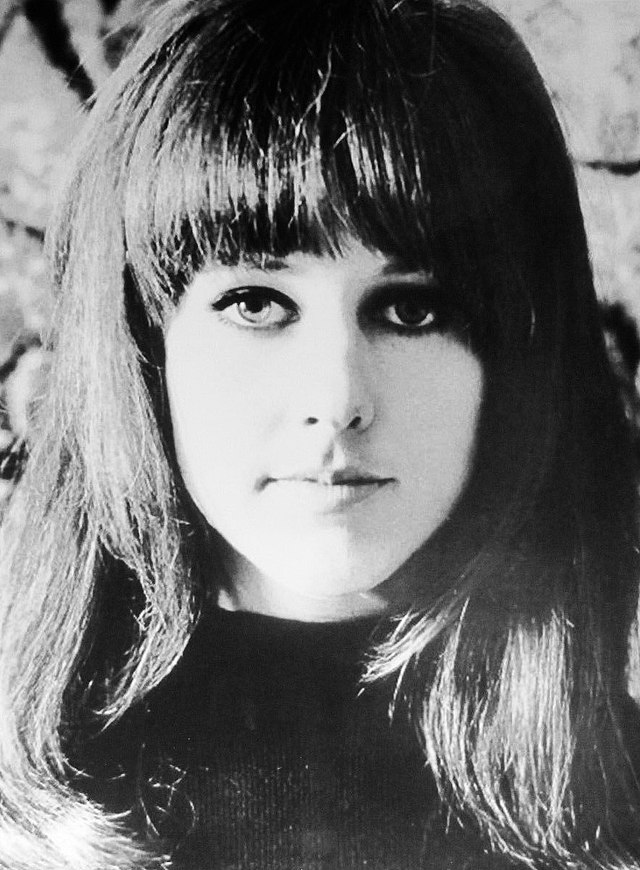
“Second Best Interview in Rock ’n Roll History”
Grace Slick
Rambles On
(And on and on
and on and on...)
Click Here
The funniest book you'll ever read!

High in The Sky Over Florida
Very High

by Jim Esposito
“Like the weirdest guy I ever met.”
– Grace Slick
Available Now on Amazon!
Click Here