
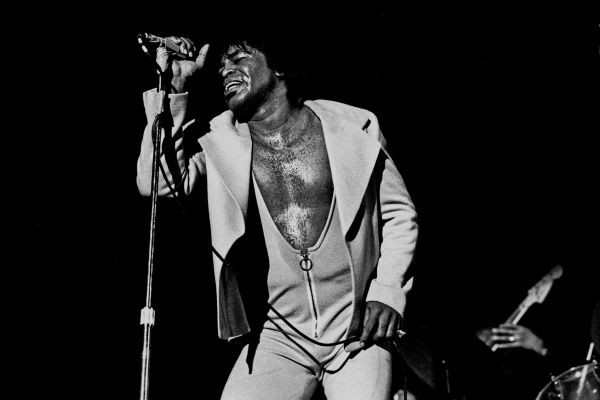
Soul Great James Brown
The True Story Behind The Godfather of Soul's Big Come Back 1982
CURATED BY INTERNATIONALLY RECOGNIZED ROCK JOURNALIST JIM ESPOSITO
The Real Story Behind The 1982 Come Back of Soul Singer James Brown
Stories Behind The Stories
Rock Journalists relate tall tales
and amazing adventures,
what it was like hanging out backstage
with Rock Stars back in the day.
In the early 80s, the career of the legendary “Godfather of Soul” James Brown was in the proverbial crapper. The IRS after him like the Hounds of Hell, he was supposedly hooked on Angel Dust. Nobody was booking him. Nobody. James Brown’s revival, coming back from the dead, was thanks to one man – Gary LoConti. He doesn’t get the credit he deserves for this, but trust me – it was Gary LoConti. All Gary. And a stroke of genius concert promotion.
Scour the internet you find one mention, a single blurb on Wikipedia:
“Despite Brown’s declining record sales, promoters Gary LoConti and Jim Rissmiller helped Brown sell out a string of residency shows at the Reseda Country Club in Los Angeles in early 1982. Brown’s compromised commercial standing prevented him from charging a large fee. However, the great success of these shows marked a turning point for Brown’s career, and soon he was back on top in Hollywood.”
A “residency?” It was two shows. And giving Jim Rissmiller any credit whatsoever is a travesty. Rissmiller actually passed on the show. Didn’t like the idea. Declined. So Gary LoConti rented the room, promoted the concert himself.
I was there. I worked those shows. This isn’t a story I looked up, researched. I lived it. James Brown came off to thunderous applause that first night, I was backstage, He threw his arms around me, hugged me. He was a sweaty mess. But that was cool. I happened to be the first person he saw, a six foot white guy in a Country Club tee-shirt. But James was jubilant. Because he knew he was back.
Now I don’t have insight into many historical events, but I did play a small tangential role in the revival of James Brown’s career, so I thought I’d set the story straight.
James Brown was a great artist, a tremendous talent. He probably would’ve made some kind of a comeback at some point. But the way it happened, his 1982 resurrection was thanks almost single-handedly to Gary LoConti. Without him, James Brown’s career track would’ve been quite different. As it was, thanks to Gary’s brilliant promotion, James Brown became a hot ticket once again, was soon commanding top dollar, getting parts in movies.
In 1982 Rissmiller’s Country Club in the San Fernando Valley was the hottest rock ’n roll club in America, probably the World. Jim Rissmiller might’ve run the corporation that owned it, but the only reason it was still in business was because he hired Gary LoConti to manage it. Rissmiller was losing his ass in The Club, the way he lost his ass in everything. We’re talking about a guy who had the L.A. Colliseum sold out for a concert with The Who, couldn’t pay the band. But that's another story, and one we shall get to presently.
I don’t have anything good to say about Jim Rissmiller. He was an idiot, an alcoholic, a mean drunk. One of the worst businessmen in creation, only Jim knew what a total failure, what a total loser he really was. All for show, a poser, nobody else knew the depths to which he sank until the day it all came crashing down. I don’t know Rissmiller’s whole backstory but he and his partner Steve Wolf were big concert promoters around Los Angeles through the late 70s. Living in Manhattan Beach I was always seeing, hearing concert ads presented by Wolf & Rissmiller. In 1977 Steve Wolf was shot and killed surprising a burglar in his home. It did not take long after that for everybody to realize who must’ve been the brains of the operation.
The Country Club building had been an old Sav-on Drug Store in Reseda, which had been purchased and turned into a concert venue by Chuck Landis, who’d gone partners with Lou Adler to convert his Hollywood strip club into The Roxy on Sunset Strip. Landis was incredibly wealthy, incredibly cheap. He invited people to lunch, took them to a drug store for the 99 cent black bean special. He thought he could book country acts at this club, thus the name, but when the concept flopped he sold the business to Wolf & Rissmiller.
What the actual corporate structure was at the time was above my pay grade, however, I presume Steve Wolf’s heirs must’ve still had some kind of stake in the business since the venture was billed as Wolf & Rissmiller’s Country Club.
No matter. A shrewd operator, Chuck Landis really saw Jim Rissmiller coming. The lease Rissmiller signed was just stupid, agreeing to pay Landis $30,000 a month, plus a percentage of the bar (alcohol sales) and the door (ticket sales) from dollar one – not from a stipulated threshold taking the exorbitant monthly rent into consideration. Generally, in a deal like this, you’d get some kind of credit for the large monthly rent; you wouldn’t be paying percentages from dollar one. This deal was so bad The Club was never able to get out from under it, which severely mitigated the operation’s profitability to such an extent it contributed significantly to its ultimate demise.
Wolf & Rissmiller’s Country Club immediately began to lose big, big money.
For instance – superficial all-for-show jackass that he was Rissmiller had customized drink glasses silk-screened bearing The Club’s logo. They were expensive, and most were promptly stolen by patrons at the end of every show.
Rissmiller was losing around $70,000 a month before he hired Gary LoConti to manage The Club. Gary turned the operation around. Before long The Country Club was making around $80,000 a month. Even that, however, could not keep Wolf & Rissmiller afloat. More than anything that should tell you what kind of businessman Jim Rissmiller was. He was making $80,000 a month on the Country Club, but the rest of his operation was losing so much he eventually ended up with the L.A. Coliseum sold out for The Who and couldn’t pay the band.
Gary LoConti had pretty much grown up promoting concerts. His parents owned The Agora Clubs, a string of concert clubs through the state of Ohio. Gary flew out to L.A., spent a few days assessing the operation, told Rissmiller he’d manage The Country Club for no salary – just half of what he saved the business every month. For some reason Rissmiller was not dumb enough to take this deal, but hired Gary at a healthy enough rate of compensation.
Gary LoConti and I had been friends for years, having crossed paths originally when I was a music journalist in South Florida and he was managing a local boogie band called L.A.W. A magazine for whom I was freelancing assigned me to write a story on L.A.W., playing a two-week gig at The Flying Machine by Fort Lauderdale International Airport. I never did write a story, but instantly became good friends with the band, their roadies, hung out with them, getting high, while they were in town.
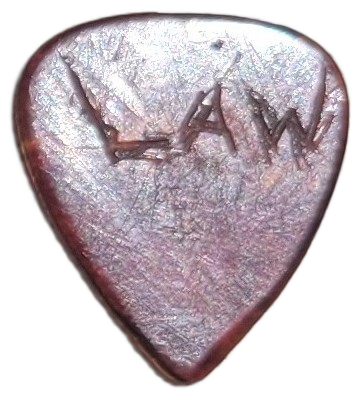
They were staying at a funky hotel off Fort Lauderdale Beach, The Sassy Fox. Owned by an old circus guy, he gave rock bands a good rate. It was the first time I ever heard that saying about Ohio girls – a hole at each end and high in the middle. I also remember pulling car keys out of my pocket, a guitar pick came along with them. Louie, one of L.A.W.’s roadies, a fat fuzzy lovable looking freak with curly black hair, saw it. I told him it was given to me by the last band I’d written a story on. He reached into his pocket, offered me one of their band’s picks. I explained mine was a custom pick, engraved with the name of whatever band it was. (For some reason, I think it might’ve been Air Supply.) They used to throw them to the audience, and they’d given me one. I showed him the name of the band engraved upon the pick.
Louie pulled out a knife, proceeded to carve the name of their band into the hard vinyl pick he’d offered, putting it on the roof of a car in the parking lot. This car had a vinyl top. (Remember those?)
“Hey, man,” I offered. “I don’t think you should be doing that there. If your knife slips, you might cut the roof of that car.”
Louie looked at me, nodded, realizing I was right. He called his fellow roadie, Lefty, a tall stringy paranoid dude with rounded shoulders, motioned for him to turn around, bend over. Lefty did. Louie held the pick on Lefty’s back, carved the letters L-A-W. into it.
That way, should the knife slip, he wouldn’t be damaging the car’s vinyl top.
Rock ’n roll, baby.
As time went by Gary and I stayed in touch. In 1975 I was living in Gainesville, a journalism student at the University of Florida. L.A.W. was opening for Bob Seger at Richard’s, a club in Atlanta. I’d been there before to do stories on The New York Dolls and Hydra, a Southern prog-rock band. I drove up, hung out with the guys.
The highlight of this trip, I had to go down to Richard’s one afternoon, turned out Seger and his band were rehearsing. I watched for like an hour. Seriously some of the best music I’ve ever seen. I’d met Seger a couple times. He’d written “Night Moves” right in front of me in the back of a Winnebago at a drive-in theatre across from Lauderdale International (maybe a mile from The Flying Machine, where I’d met L.A.W.) I do remember Bob and his band did an extended jam to “Bringing It Back”, an album cut off J.J. Cale’s first, Naturally, which was interesting, since it was a rather obscure track, and I’d never seen him do that song before.
After G-ville I moved to Los Angeles to bomb out as a novelist and screenwriter. In the later 70s I flew back to Fort Lauderdale to see my parents, got a call from Gary LoConti.
He was moving to South Florida to open a new Agora Ballroom off I-95 and Hallandale Beach Boulevard (where he’d book Johnny Depp and The Kids). Gary had just gotten into town, asked if I could come help him unload his truck. I graciously agreed. Didn’t know what I was getting myself into. When I got to the house he and his wife Carlene had rented I discovered they had like a 20-something foot box truck packed to the gills with furniture. Couches, easy chairs, end tables - all intricately nested into each other. These people did NOT travel light. I still have nightmares about his entertainment center – three pieces, heavy wood, had to go in through a window.
He did it to me again a couple years later when I was back in L.A. I get a call from Gary. He just moved into town to manage Wolf & Rissmiller’s Country Club. Could I come help him empty his truck?
Again, that entertainment center.
Gary brought me in to work for him at The Country Club. Technically, I was some kind of a manager – head of security, a maitre d, a floor manager. In reality I was his Gestapo, his secret police. The first thing you must learn about the restaurant or bar business – the employees will steal you blind. Bar people, cocktail waitresses and bartenders, they see the worst of human beings, tend to have a rather low bar when it comes to honor and integrity. (Believe me, I’m being nice here.) Aside from the concert security, overseeing the bouncers, the front door, the backstage doors, the crowd control, a large chunk of my job was watching the employees.
Gary spent most of the night in his office on the second floor, backstage. On the phone. He needed eyes and ears watching the operation, someone he could trust. He knew I would always tell him the truth. In the bar business, this is invaluable. I cruised around all night like a shark, sticking my nose into everything. The other employees didn’t like me much. Like I cared. Gary was a long time friend and I was looking out for him. As for the others, as Voltaire once said: “Make my enemies ridiculous.”
True story. A nightclub’s enough of a soap opera, but the politics behind the scenes at The Country Club would’ve seemed excessive to the Borgias. The other staff resented me, naturally enough, were constantly trying to get me in trouble, get me fired if they could, always running to Gary with stories about what an asshole I’d been. They never realized I was Gary’s asshole. That was literally why he paid me.
One evening Gary took the night off. It wasn’t going to be a big show, a wimpy little New Wave band, sold shit for tickets. He figured his Assistant Manager could handle it. I often drove up to the Valley from where I lived in Manhattan Beach in mid-afternoon, beat the L.A. rush hour traffic. We’d worked a deal with a local health club; I had free passes, they had an indoor basketball court. On this occasion, however, since Gary had taken the night off, I stopped by his house, hung out with him and Carlene. We smoked dope, did some coke, ordered pizza. It was nice just hanging out like friends again. When it came time for me to leave, go work at The Club, Gary told me screw it, just hang out. I said I should probably call in at least, let them know I wasn’t coming. He said he’d take care of it.
As the evening wore on Gary called The Club to check in. Wasn’t much going on, but his Assistant Manager did inform him that I’d come in, punched in and left. Getting paid by the night, I just punched in to show I was there. Freaking genius. Somebody had actually punched my time card in. Unfortunately for him I’d been with Gary since mid-afternoon.
This oughta tell you what kind of people we were dealing with. Scheming, back-stabbing and stupid. Next time they went running to Gary, complaining about something I’d done or said – who was he going to believe?
As for me, well you wanna play hardball, you better bring your mitt.
Meantime, Gary LoConti turned The Country Club around. No more customized glassware, we went to plastic cups. He tried to re-negotiate the lease, but Chuck Landis wasn’t about to let Jim Rissmiller off the hook. There was a 30 day cure clause in the contract, however, so Gary immediately began paying the rent 29 days late.
As for Jim Rissmiller, he was no more than an occasional annoyance, to what degree depending largely upon how drunk he was. Once Gary LoConti got The Club into the black it became the only part of Wolf & Rissmiller that was actually making money. Jim liked to show up, strut around like he owned the place. But he was a major embarrassment, a mean drunk, caused scenes.
Mainly Rissmiller would stop by about once a week to get a wad of cash they were skimming off the operation. That was a big reason people liked owning bars – it was a cash operation, and you could skim. Many times Jim came in with his wife. Can’t recall her name (Laurie, maybe) but she was a nice lady, a corporate wife. Rissmiller had a mistress (but, of course) used to be a cocktail waitress at The Club. He’d set her up in an apartment. The guy would stash his wife upstairs on the VIP balcony, spend the night drinking with his gumad at a table on the floor. I’ve never felt sorrier for any woman than I did for his wife, for she knew. The look on her face as we were pouring this vituperous drunk asshole into his car so she could drive him home, it was terrible. She was humiliated.
At one point Rissmiller had a major shitfit when he heard some of his employees might’ve been doing drugs. You think? The early 80s, we’re running the hottest music business venue in Los Angeles. There were more drugs going through The Country Club than frickin’ Morocco. We had two or three coke dealers stopping by every night to shop their wares to bands who just hit L.A., were looking to party. Had he ever come out of his alcoholic stupor long enough he might’ve realized this. But some waitresses wouldn’t toot up Rissmiller’s gumad one night, so she told him his employees were on drugs. He had signs printed up, posted around the kitchen and backstage saying any employees doing drugs would be fired.
The cheap son of a bitch had them made of cardboard instead of metal, otherwise we could’ve used them to chop up lines on.
A great time and place to be alive. We were fortunate because the Universal Amphitheatre was closed while they domed it in. It held three to four thousand. The Roxy on The Sunset Strip was a prestigious venue, but only held like 600. Our capacity was just under a thousand seats. So The Country Club was in a sweet spot. Since we were in Los Angeles, the center of the music business, bands wanted to play L.A., had to play L.A., impress agents, record companies. If they couldn’t sell out a concert hall (and nothing would look worse than a half-filled hall) they had to play Clubs.
Then sheer economics went to work. Rock ’n roll bands had agents. Agents had calculators.
“How much are you going to charge for a ticket?” they would ask.
Gary would tell them: “Twelve dollars.”
“And what’s your capacity?”
“A thousand.”
“Tell you what,” they would tell Gary, “our band will play your club for $12,000.”
Like – DUH! But that was okay. Because we wanted the bar – the alcohol sales. That’s where the money was. Food is a low markup – 10 to 12%. Somebody sends back a steak, it’s 8-10%. But alcohol is a gold mine. You pour a drink for 50 cents, you’re selling it for $6.00.
Yes, six dollars. For the times we might’ve been a little higher than most. The first night of James Brown, a customer demanded the manager. When I arrived a waitress was waiting with a tray of drinks – four doubles.
“What’s the problem?” I inquired.
“How much are these drinks?” the guy demanded.
“Four doubles,” I quickly calculated, looking at her tray, four drinks in the plastic cups that signified a double. “Twelve dollars each. That’s $48.00.”
The waitress rolled her eyes, like I told you so.
“Forty-eight dollars?” the guy repeated, aghast.
“Man!” I told him. “You’re seeing JAMES BROWN!”
That’s another true story. Twelve dollars for a concert ticket and six bucks a drink. And the guy’s complaining. A HISTORIC concert, no less. Talk about the good old days.
The Club had concerts five, six nights a week, every week. Rock, Heavy Metal, Jazz, Blues, Country, Soul, Reggae, New Wave and Punk. No local bands. Recording artists. Nationally known, international acts. Roy Orbison, Huey Lewis & The News, Merle Haggard, Kris Kristofferson, Johnny Winter, B.B. King, Smokey Robinson, Jerry Garcia and Bob Weir… The list goes on and on. That was on the stage. Celebrities came out to see shows: Jack Nicholson, Dan Aykroyd, John Travolta, Stevie Wonder, Linda Ronstadt, Pat Benatar, Bruce Springsteen and Tom Petty, Michael Jackson and Muhammad Ali. Jackson Browne and David Lee Roth stopped by frequently just to hang out. The guys from Motley Crue, just on their way up, came by. They were Valley kids, so we’d let them in.
(I do have a fictionalized memoir of my experiences at The Club, a novel called Rock ’n A Hard Place which you can purchase and read through Amazon.)
Getting to James Brown, it was Gary’s idea to book him. Generally, he had a free hand but Jim Rissmiller stuck his nose in this time, objected. Brown had fallen off the map, stories were circulating about his tax trouble, his drug problem. So Rissmiller wanted to pass on the show. Decline.
Gary said if you don’t want to do James Brown, rent me the room, he’d promote the concert, assume all the risk. He booked James for one night. Tickets went on sale. Initial reports were not good. Sales were sluggish. If this concert flopped, James Brown was pretty much toast, but in a genius stroke of promotion Gary bought the show out himself. To do this with Ticketmaster involved it meant he had to have Sue, our box office girl, physically print out all the tickets - like 900 of them, bring them to his office. If this didn’t work Gary would basically have to cough up the money for all those tickets.
The show was declared a sell out. Gary added a second show and this one took off. Once everybody saw how fast the first concert sold out the second night of James Brown became a hot ticket, sold out within days. People now clamoring to see James, as they called in the box office informed them though the second night was a sell out there might be cancellations from the first night becoming available… So Gary was able to sell all the tickets he had printed up, and we had two sold-out shows.
When you were working a venue like The Country Club, you couldn’t help getting jaded. One night after another, one show after another, each artist bigger than the next. Every now and then, however, one show stood out. The energy was there. It would smack you in the face. Yes, you’d think – THIS is why we do it. For nights like these.
James Brown was one of those.
The music – the show on stage – was HOT! James had a deserved reputation for being one hell of a performer, and he had a great funk and soul band backing him. Even a case-hardened veteran like myself had to simply stop at times, watch and listen. James got the whole crowd moving, palpitating to the infectious beat blasting from the stage.
What happened on stage, however, on nights like those, were only half the show.
I recall a number of little anecdotes and encounters from those nights.
James had his quirks, and he was quite the dictator when it came to his band.
Before the first show I was hanging with Dr. Che, my backstage guard and Chief Anesthesiologist. Che was big and black, and he could do that bad mother routine like you would not believe. I’d met him originally, he was bodyguard for B.B. King. Hanging around the dressing rooms I became aware of his presence, looming in the background. At some point our eyes met. He smiled. We became friends. I hired him to be our backstage security.
Hanging with him before the first James Brown show the backstage doorbell started flashing. You’d hardly ever hear an actual bell ring when there was a band on stage, so when people hit the button outside the backstage door a light flashed.
Popping the door open we discovered a nicely dressed black woman who explained she was the bass player’s wife. I ran up to the dressing rooms, found the bass player, who accompanied me down to the door, said yes, she was his wife. So we let her in. Standard procedure. Professional courtesy.
James Brown was there, however, and he freaked. Went running right to Gary.
“Mr. LoConti! Mr. LoConti!”
After conferring with James, Gary came back to me and The Doctor, kinda sheepishly explained that Brown’s band did NOT have a guest list, and we weren’t supposed to let in wives or girlfriends for his musicians.
In addition, they stationed a guy with a counter, a little hand-held clicker, to count the number of people that came through the front door. Now I realize musicians – and especially black musicians – were frequently fucked over by the businessmen in the entertainment industry. (I’m sure you’ve heard the story about Van Halen and the brown M&Ms.) Still, considering we were the only people who were booking James Brown this did seem a little ticky-tack.
Celebrities were okay, however. In fact, the biggest celebrity hound in the building was James Brown himself, who wanted to be surrounded by famous people. A number of them turned out to see his show. Stevie Wonder arrived with handlers. We set him up on the VIP balcony.
Awhile later, hanging with The Doctor backstage the doorbell light flashed again. Che was sitting on his stool, reading his Karate magazine. I told him I’d get it.
Popping the panic bar I push the door open, found a middle aged black man, behind him a skinny black teenager in a sailor’s cap, flaps down.
The middle aged guy leaned forward to speak privately.
“I got Michael Jackson here,” he told me.
Looking at the young man, he shrunk a little under my gaze, seemed shy. Looked like Michael Jackson, though I’d be lucky to pick the guy out of a police line-up. A rocker, bubble-gum stars meant nothing to me. Jackson wasn’t quite the mega-star he would eventually become. At the time, Michael was working on Thriller, the album which would propel him into the stratosphere. Still, the situation seemed legit enough.
I pushed the door all the way open. “Okay. Come on in.”
They didn’t move.
The middle-aged guy – his driver, bodyguard, flunkie – glanced around, made sure we weren’t getting mobbed. Leaning forward, in a loud whisper, he stressed: “It’s Michael JACKSON.”
Making a gracious sweeping motion, I said: “He is welcome.”
Panic crept into the guy’s eyes, like his job was on the line if we were not sufficiently impressed or something. He tried, once again.
“Man… It’s MICHAEL JACKSON!”
“Look,” I told him finally, “I’m closing the door. Are you coming in? Or aren’tcha?”
Another with whom I had some interaction was John Davidson, a square establishment celebrity, one of those good looking TV stars, a regular on Hollywood Squares, sang Easy Listening, got guest roles on shows like The Love Boat and Fantasy Island. Cutting through backstage before the show the Road Manager grabbed me, standing with Davidson and this incredibly beautiful blonde, asked me to run them out to their reserved table.
Again, I’m a rock ’n roller; this guy meant little to me. But as I said, celebrities were people. Some were very nice. John Davidson was one of those. Down to Earth, no star trip, he made a point to get my name when we shook, introduced his lady, whereupon all mental activity ceased. What a stunner. Bo Derek class, a definite 10, very natural, not heavily made up and bimboed out. They seemed out of place at a James Brown concert. After picking up my jaw, doing my best not to babble incoherently (for she was one of those) I escorted them out to their reserved table, second tier, right side of the stage.
Later, James was most the way through his set, the Road Manager grabbed me once again.
In the usual rock fashion, music so loud, he had to lean in, shout into my ear:
“We need you to get John Davidson.”
Wondered if I heard him right. “What?” I shouted.
Into my ear again he yelled: “When James starts ‘Please, Please, Please’ we need you to get John Davidson. There’s only one more song after that. When James comes off stage he wants all the stars who came to see him here to greet him.”
Even coming from a musician, this seemed strange. Still, if I ran it by Garrett I knew what he’d say. “‘Please, Please, Please’ – you know how that song goes, right?” As a result, when I heard James and his band break into the aforementioned tune I reported forthwith to Davidson’s table.
Fifteen feet from the stage, I had to lean over, shout into his ear: “I was told to come get you.”
He looked at me, hands out, like “What?”
Into his ear again I yelled: “I was told to bring you backstage.”
Davidson scrunched his face up.
I leaned back in, cupped his ear with one hand, shouted: “James wants you there to greet him when he comes off stage.”
Davidson rolled his eyes, a pained expression upon his face. Rising he motioned for his girl, then turned to me, leaned over, shouted into my ear: “I wanna GO.”
Cupping his ear I shouted back: “Go to the bathroom? Or split?”
He smiled. Enunciating carefully so I could read his lips he told me: “Split.”
Nodding, I motioned follow me, lead them up the center aisle, into the front lobby, popped one of our front doors.
“Thanks, man. Appreciate it,” said Davidson, shaking my hand, ushering his lady into the cool, refreshing night air.
“My pleasure,” I offered, speaking directly to her. She thanked me with a dazzling smile. Grinning, Davidson waved goodbye.
James Brown’s main man back in those days, his Tour Manager, was Reverend Al Sharpton. Gary’s liaison, I had no direct contact with The Rev, though we passed each other plenty of times backstage, around the dressing rooms. Word had filtered down, though, he was packing heat, carrying a gun.
At the end of the show, upon leaving the stage, after graciously accepting the praise and congrats of the celebrities gathered to greet him, James would sequester himself in his dressing room under one of those portable salon-style beehive hair dryers. He would not see anybody, talk to anyone until his do was dry.
Meantime, in the hall through the dressing rooms, his band and entourage began to form a line outside Gary’s office. Given Brown’s tax troubles everyone from his Road Manager to his Drum Roadie were paid in cash every night. It was part of the settlement, in the contract. Gary would issue each person a check, which they would endorse, then pay them cash.
Reverend Al Sharpton presided over the process, with his gun, to make sure none of the band members got too upset because frequently James would actually dock them for mistakes they might’ve made during the show, missing a queue, botching a horn line or something.
The one little anecdote I remember which probably says the most about the artist and legend that James Brown was is probably the hardest to tell in print. It comes across better when spoken, acted out. But that’s obviously not available to us here.
It concerns a musician, and older (30-ish) black guy. I think his name was Ronnie. He played in Smokey Robinson’s band. Smokey had just played five nights at The Club and we knew Ronnie pretty well, a horn player if I remember. He was backstage at James Brown, and quite inebriated, feeling no pain. Smokey’s band was comprised mainly of session players, so Ronnie was top-notch, and he obviously had history with James.
So a bunch of people are milling around in the hallways outside the dressing rooms after the second night, basking in the afterglow of two great shows. James has emerged from the hairdryer with his do sufficiently coiffed to comingle and everybody’s mildly amused at the scene Ronnie’s making. He’s drunk, shining up to James, reliving his glory days, telling a story about one of James Brown’s recording sessions.
“And everybody’s saying how great it sounds,” says Ronnie, “but you…” He addresses James, who smiles patiently at his drunken compadre. “You’re going ‘No. We ain’t quite got it yet.’ You go over to the piano…”
Here, Ronnie acts like he’s bending over a piano.
“And with one finger,” continues Ronnie, holding up his index finger, then pretending he’s hitting a keyboard with it, “you go Bing! Bing! Bing!
“That was it! Bing! Bing! Bing!” chortles Ronnie again, bent over at the waist, playing air piano. “One note! Bing! Bing! Bing! With ONE finger!”
Yes, a great time. But eventually all good things must come to an end, and that was thanks to the moronic mismanagement of Jim Rissmiller, who unbeknownst to everyone but himself kept going deeper and deeper into debt. Most of what I know about the bitter end I heard through Gary LoConti, and the stories I’ve heard recently differ somewhat from the stories I heard back then. At some point, when the walls started closing in, Rissmiller either went looking for or was approached by investors who wanted to buy in, save his sorry ass. Rissmiller had debts. One story goes he told his investors it was $200,000. They said no problem. As matters progressed it became $400,000. Still no problem. But that was simply the tip of the iceberg. As talks proceeded with the investors, the amount of debt continued to increase.
From what I remember back in the day, though, the story was the investors were willing to come in with a wad of cash, but asked Rissmiller to clean up his debt. So he took money he was bringing in from advance ticket sales for The Who show he was promoting in the L.A. Coliseum and paid down this debt, the theory being these investors would show up with the cash and he’d be able to pay the band. Only they backed out.
For those of you who don’t know The Who was the only band who got paid at Woodstock. So to sell out the Coliseum and not be able to pay the band… Well, I’ve been the fly on the wall, witnessed a number of interesting backstage scenes, said a lot about rock ’n roll. But I’ll always be sorry I missed that one.
Classic Rock Updates
Sign Up For Our Email List!
Receive a Notification When New Content Is Posted
Email Your Email Address to jim.classicrockforever (at) gmail.com
We do not SPAM. You will receive one email every week or two.
We will never sell your email address and you can easily unsubscribe at any time.
Help Support Our Site
Shop Amazon through Classic Rock Forever
Amazon.com
Click on Link, go to Amazon, search for whatever you want. We'll get credit.
Classic Rock Updates
Sign Up For Our Email List!
Receive Notification When New Content Is Posted
Email Your Email Address to
jim.classicrockforever (at) gmail.com
We do not SPAM.
You will receive one email every week or two.
We will never sell your email address and you can easily unsubscribe at any time.
Help Support Our Site
SHOP
Amazon.com
through
Classic Rock Forever
Amazon.com
Click on Link above, go to Amazon, then search for whatever you want.
We'll get credit.
Make Sure You Visit
Our Friends at

The Ultimate Online Library of Classic Rock Journalism
Over 40,000 Articles
The World's Biggest Archive of Stories, Interviews & Reviews
From Allmans to Zappa

Click Here
Listen To Audio
Jim Esposito's
Explosive Interview
with
Ritchie Blackmore
Deep Purple's Somewhat Tempermental Guitarist Dumps The File in 1973
Click Here
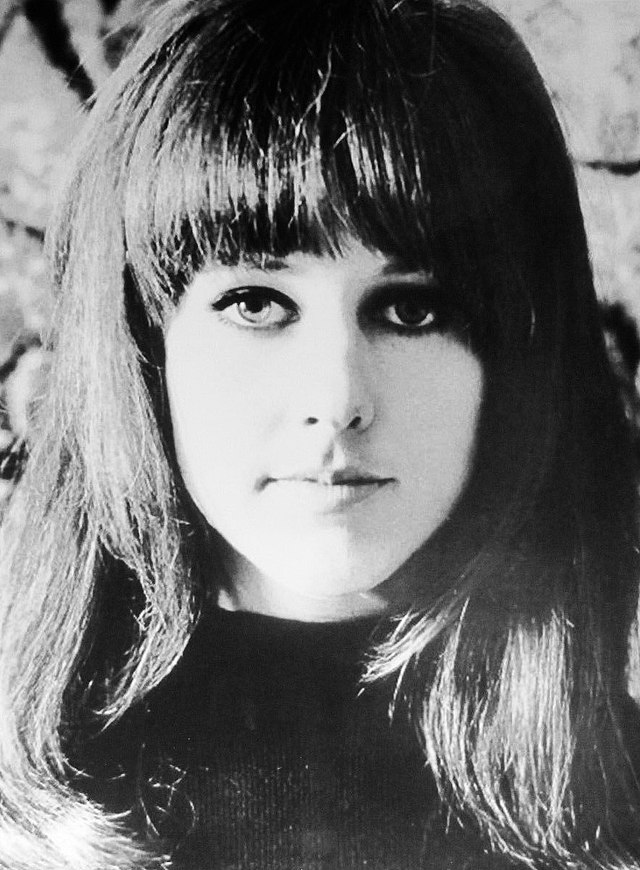
“Second Best Interview in Rock ’n Roll History”
Grace Slick
Rambles On
(And on and on
and on and on...)
Click Here
The funniest book you'll ever read!

High in The Sky Over Florida
Very High

by Jim Esposito
“Like the weirdest guy I ever met.”
– Grace Slick
Available Now on Amazon!
Click Here